Richard Dawson Kiel was a difficult person to miss. Born in
Detroit in 1939, Kiel got his start in acting as an Ugly Marine (uncredited) in
the military drama The D.I. in 1957. At
7’ 2” tall, he often placed characters focused on his tall stature. He was cast
in several televisions and movies that included The Man from
U.N.C.L.E., Gilligan’s Island, The
Monkees, and The Wild Wild West.
He got his break in 1977 as Jaws in The Spy Who Loved Me, opposite Sir Roger Moore and returned in 1979’s Moonraker to reprise his role. Although he was well recognize
as that character, after the Bond films, Kiel went back to guest appearing on
television and in films. Apparently, Kiel declined the role of Chewbacca
because he felt he more opportunities in the Jaws role.
In 1991, Kiel wrote and produced The Giant of Thunder
Mountain, a family film that garnered he
quite a bit of viewer praise. However, the following year, Kiel was in an auto
accident that affected his balance, so thereafter he needed assistance with
walking.
Kiel’s attachment to the Bond franchise as Jaws was
rejuvenated through a newer medium: the video game market. In 1997, his
likeness was used in GoldenEye 007. In
2004, he lent his voice in James Bond 007: Everything or Northing. In all, he was involved in six games.
I met Kiel a couple of times at Bond reunions hosted by the
Hollywood Collector’s Show in Burbank and Los Angeles. On both occasions, he
was exceeding kind and friendly. It was very sad to hear the news last year
when he passed.
I wasn’t able to find much on English actor Raymond Young
when I was researching details about him. He started acting after World War II
in a television movie titled She Stoops to Conquer (1949) in which he played ‘Young Marlow’ in the
film. Young made a lot of guest appearances on television shows throughout his
career of almost 80 credits. His last role as Porter was in the 1991 Jeeves
and Wooster series. He passed away in 2011
at the age of 93.
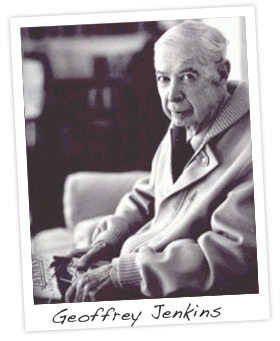
Geoffrey Jenkins
Born this day in 1920
Author of Per Fine Ounce
Originally from South Africa, Geoffrey Jenkins was a
journalist and novelist who wrote several stories about his country. He became
a news correspondent during World War II and spent the war years in London
working for Sunday Times. He met and
became friends with Ian Fleming while at the newspaper.
In 1959, Jenkins wrote A Twist of Sand, his first novel, which later was turned into a
movie by the same name. Released in 1968, it starred Richard Johnson and Honor
Blackman and was directed by Terence Young.
Jenkins did some research for Fleming for one of his Bond
novels, but unfortunately Fleming died before writing the intended novel. After
some back and forth negotiation, Gildrose Productions, which later became Ian
Fleming Publications, offered Jenkins the job to write the first continuation
novel. Jenkins submitted a manuscript titled Per Fine Ounce, but it was
rejected. Sadly, only 18 pages of the story survives.
Michael Culver first casting role was as Det. Con. Haywick
in the tv series You Can’t Win (1961).
While you may not remember him in his two guest appearances in From
Russia With Love and Thunderball, if you are a Star Wars fan, then perhaps you
remember him as Captain Needa in Star Wars: Episode V – The Empire
Strikes Back.
Culver has over 100 acting credits to his name, having
appeared on the small screen and the silver screen in the intervening years of
his career. In addition, he has been active in the theatre scene that rivals
his broadcast projects. When he isn’t acting, he engages in activism to promote
peace.
William P Cartlidge
Born this day in 1942
Producer for The Spy Who Loved Me, Moonraker
Assistant Director of You Only Live Twice
Englishman William “Bill” P. Cartlidge has been a writer,
producer and director since he got his start in the business as a Third
Assistant Director (uncredited) for Follow That Horse! in 1960. He has worked with two James Bond actors:
Sean Connery and Roger Moore. In 2002, he was nominated for a Primetime Emmy
for Dinotopia (2002) as an
Outstanding Miniseries.
Izabella Scorupco was born in Poland but relocated with her
mother when she was a young child. At 17, she was discovered by a director who
cast her as Annelie in the Swedish film Ingen kan alska som vi (1988), which resulted in her becoming a teen idol.
Scorupco became a model in Sweden and Europe and then launched a career as a
singer.
In 1994, she returned to acting and was cast in a number of
films including GoldenEye (1995)
opposite Pierce Brosnan. Interestingly, she passed on two roles: Lynn Bracken
in L.A. Confidential (1997) and
as Elena in The Mask of Zorro
(1998). The former role went to another Bond alum, Kim Basinger, who starred opposite Sean Connery in the 1983 Never Say Never Again.
I enjoyed her performance in GoldenEye and candidly, I liked the clothing choices made for her, especially in the early scenes of the film of her working at the base. It would be nice to see her in more roles.
Marguerite Green
Passed away this day in 1983
Production Secretary for From Russia With Love, The Spy
Who Loved Me, Moonraker
Marguerite Green was originally from Brentford, England and
got her start in the crime drama The Clouded Yellow (1950) as a production
secretary. She would have rubbed shoulders with stars Jean Simmons and Trevor
Howard. In her 30+ years in the business, Green worked with several well-known
stars: Alan Ladd, Stanley Baker, Jack Hawkins, Michael Caine and two James
Bonds, as portrayed by Sean Connery and Roger Moore.
If you happen to have The Making of James Bond – 007 (1977) then you’ll get to hear from Ms Green herself
of her work on the Bond films.
Lyricist for Casino Royale (1967), On Her Majesty’s Secret Service, Moonraker
American lyricist Hal David is best known for his
collaboration with Burt Bacharach. As a lyricist, David’s lyrics are
immediately recognizable even though his name is not.
During the 1970s,
Bacharach and David worked with The Carpenters, Dusty Springfield, B.J. Thomas,
Tom Jones, and Dionne Warwick resulting in such hits as “Raindrops Keep Fallin’
on My Head”, “Do You Know the Way to San Jose”, “Walk On By”, and “What the
World Needs Now Is Love”.
David’s lyrics accompanied three James Bond films: with
Bacharach, “The Look of Love” from the 1967 film Casino Royale; with John Barry, “Moonraker” sung by Shirley
Bassey; and my personal favorite, “We Have All the Time in the
World” with Barry again and sung by amazing Louis Armstrong for the 1969 film On
Her Majesty’s Secret Service.
Another song that I have always enjoyed was from Butch Cassidy
and the Sundance Kid, sung by B.J. Thomas:
Leach playing the cimbalom
John Leach
Passed away this day in 2014
Musician: Koto for You Only Live Twice
Composer and musician John Leach passed away one year ago
today. He composed for film and television – sometimes the most unexpected
shows. He was probably known for his expertise on the cimbalom, an instrument
rarely used in classical music, yet seemed right a home in the spy films of the
1960s. Its sound resonated the Cold War – haunting, lonely and cold.
In a Telegraph obituary, composer John Barry described
Leach’s passion for collecting musical instruments from around the world that
he would learn to play. “…he played this big cimbalom and I knew it was right for
what I needed…After I’d written the theme I went back to John Leach and he
played it, letting all the tones ring out…so it got that very distinctive sound
which I wanted for the movie.” The movie Barry was referring to was The
Ipcress File (1965) starring Michael Caine.
Then, Barry and Leach collaborated again in You Only Live Twice (1967). To accompany Bond’s adventure in Japan,
Leach played on the koto, a 13-stringed instrument.
Let’s have a listen to Leach playing the cimbalom for The
Ipcress File:
Englishman Jim Clark has done a bit of everything in front
of and behind the camera. He’s been an actor, writer, editor, director,
producer, and sound. He got his start at Ealing Studios. He worked as an
Assistant Sound Editor for The Cruel Sea
(1953) and the following year, was the Second Assistant Editor on The
Love Lottery (1954), a position that he
stayed in for much of his 50+ year career.
Clark received an Academy Award and a BAFTA for editing The
Killing Fields (1984) and a BAFTA for The
Mission (1986). And in 2005, Clark was
honored with the American Cinema Editors Career Achievement Award. In 2011, he
wrote his autobiography, Dream Repairman: Adventures in Film Editing.
Lonsdale as Sir Hugo Drax
Michael Lonsdale
Born this day in 1931
Hugo Drax in Moonraker
Parisian Michael Lonsdale has had a long and successful
career as an actor. With a French mother and an English father, they moved from
Paris to Guernsey then London and eventually Casablanca. After the war, he
returned to Paris where he studied painting before taking an interest in
acting. He started with stage acting and then in 1956, he moved to the big
screen with It Happened in Aden in which
he was cast as Sinclair.
Most of his acting credits are in French film and
television, but he has done some English projects. For example, as Lebel in The
Day of the Jackel (1973); as the Abbot in The
Name of the Rose (1986) in which he starred
opposite Bond alum Sean Connery;
as Dupont D’Ivry in The Remains of the Day (1993); as Jean-Pierre in Ronin (1998) opposite Bond alums Sean Bean and Jonathan Pryce; and as Papa
in Munich (2005) opposite yet another
couple of Bond alums, Daniel Craig and Mathieu Amalric. In all, Lonsdale has
over 230 acting credits!
Bond Trivia: Because Lonsdale is bilingual, for the French
version of Moonraker, he dubbed himself.
Deakins on set
Roger Deakins
Born this day in 1949
Camera Operator: “A” Camera for Skyfall
Director of Photography on Skyfall
Roger Deakins is an accomplished English cinematographer who
has worked a who’s who of directors: Michael Apted, Roger Spottiswoode, David
Mamet, Martin Scorsese, Ron Howard, M. Night Shyamalan, and Angelina Jolie. He
has worked with the Coen brothers for the past 25 years, Sam Mendes for three
films, and currently with Denis Villeneuve on the new Blade Runner project.
Deakins’ approach of utilizing limited lighting brings out
the beauty of his scenes and actors in all of his films. His cinematic eye has
led to several accolades over the years. Below are just a few examples:
Yesterday, I attended the sixth annual H.P. Lovecraft Film
Festival and CthulhuCon held in San Pedro and it was a packed day and evening
of all things horror. I got to listen to readings, watch several short films
inspired by Lovecraft, and meet many friendly people. One of the highlights of
the evening was meeting Richard Stanley who directed Dust Devil (1992) and Hardware (1990). I am particularly fond of Dust Devil and I
think it is a fascinating film of exploring South African mysticism. I believe
it is an underrated film. I need to re-watch Hardware as I haven’t watched it
in a number of years. Anyway, the festival was fun and I look forward to next
year’s festival.
Lamar Boren
Born this day in 1917
Underwater Cameraman for Thunderball, You Only Live
Twice, The Spy Who Loved Me, Moonraker
Lamar Boren was featured back on January 15 when he passed
away in 1986 in San Diego, California.
Bruce Cabot
Passed away this day in 1972
Saxby in Diamonds Are Forever
Bruce Cabot was featured a couple of weeks ago on April 20
to mark his birth in 1904.
Anthony Ainley
Passed away this day in 2004
Hong Kong Policeman #2 in You Only Live Twice
There are a handful of actors who had ties to James Bond and
Doctor Who; Anthony Ainley is one of those actors. Ainley was unique though
because he played the Master for nine year, which made him the “longest serving
actor to appear as a regular character in the TV series’ history” according to
his IMDB’s profile.
Ainley came from an acting family and took his first role at
ten years old in The Foreman Went to France
(1942), but he didn’t land another role in the television series It’s
Dark Outside in 1965. He worked in theatre
for many years while making guest appearances on a number of television series
over the intervening years until 1981. At that point, Ainley became the Master
on Doctor Who.
After Doctor Who, Ainley receded from public life and kept
to himself. In 2004, he passed away at the age of 71. The cause of death was
listed as cancer.
Happy Sunday evening! Today in Bond history, Philip Locke
who played Vargas in Thunderball passed away this day 2004. You may remember I
did a blog post last month since Locke celebrated his birthday on March 29.
Since that entry was fairly close to today’s entry, pulled out a recent
acquisition to share.
This year at Wondercon, there were several vendors selling
curios of yesteryear, including Hotwheel cars, movie posters and yes,
collector’s cards. So, I bring you a vintage package of Moonraker cards
unopened (front and back):
I am curious what the sticker cost was originally and I even tried to pry off the recent sticker to no avail. Oh well....
The top card was the maniacal villain of the film, Drax:
Sadly, the bubble gum has seen better days. My test
subject (my boyfriend) said the gum tasted awful and it was almost as hard as a rock. I tried breaking one of the pieces, which snapped when I did so:
The package came with ten cards (I had two duplicates), a
sticker card, and of course the decaying bubble gum:
The backsides of most of my cards were of a mystery image or two.
It looked like there were a couple of images, based on the border colors, red
and yellow. Unfortunately, I didn’t have enough to go on to make out exactly
what the images were.
And here are some close-up shots of the two cards that did
have narratives on the back.
And, ta-da, the sticker of Mr. James Bond himself (Sir Roger Moore):
Lois Chiles hails from Texas and attended the University of
Texas at Austin and Finch College (NYC). She became a top model during the
1970s, which is around the time she started acting. Her first acting credit was
in 1972 as Shelley in Together for Days,
but her big break came the following year when she starred as Robert Redford’s
on-screen love interest in The Way We Were.
Interestingly, Lewis Gilbert originally chose Chiles for the
role of Agent Triple X or Anya Amasova in The Spy Who Loved Me, however Barbara Bach ultimately filled the role,
which I think was the much better choice. Gilbert once again tapped Chiles to
be Bond Girl Dr. Holly Goodhead in Moonraker and this time, she accepted.
I have seen a few of the movies listed on Chiles’
filmography, but I don’t remember her performances. So, based on that
admission, I thought Chiles was miscast as Goodhead. Revisiting a latter scene
in Moonraker in which she and James Bond
(Roger Moore) are chasing/destroying the probes, she is deadpan to the point of
being monotone with her line delivery. In the earlier scenes at her lab, the
deadpan delivery works for the location (sterile lab environment) and distance (she had just met Bond, so he was a stranger to her), but by the end
of the film, one would think that the life/death situation would have
spurred her emotions a bit. I think maybe it was not a role she was comfortable
with at the end of the day.
Chiles had several more acting credits after her Bond film.
She did quite a few guest appearances on popular television shows over the
intervening years. In 2005, she fought breast cancer and it looks as though her
last acting role was in the 2006 Kettle of Fish.
Live and
Let Die was Ian Fleming’s second novel
published by UK publisher Jonathan Cape in 1954. Set in London, the US and
Jamaica, Fleming introduced Mr. Big, who was associated with SMERSH. He was
smuggling old gold coins, which led to Bond involvement with the US, however
the real story lay with the East-West relationship and the Cold War
Released the
following year, Moonraker was the third
novel from Fleming. In the book, Bond has to stop Sir Hugo Drax who wants to
destroy London with a nuclear rocket. The story was set in the UK and dealt
with the theme of an internal threat, which seemed to anticipate many years in
advance of the situations that the UK would face in this contemporary
environment of terrorism.
The Live
and Let Die novel was adapted to film in
1973 and was the eighth Eon Productions and the first outing for Roger Moore as
James Bond. The Moonraker novel
was drastically changed to include a space station storyline and it became the
eleventh film. Roger Moore starred in this Bond film as well.
Albert
R. Boccoli
Born this
day in 1909
Albert
Broccoli was born in Queens New York and was the youngest child of two. In the
early 1950s, he moved to London and worked with Irving Allen. They formed
Warwick Films and this association allowed Broccoli to meet and work with
individuals that he would later select to work with on the Eon Productions Bond
films.
Broccoli and
Harry Saltzman became co-producers (Saltzman would not sell his rights to make
Bond films) on the James Bond films, which started with Dr. No in 1962. While Broccoli became more committed to the
Bond series, Saltzman was interested in pursuing other projects, which
eventually led to their split.
In 1981, Roger
Moore presented Broccoli with an Irving G. Thalberg Memorial Award.
This is a hectic day for Bond events! Let’s start with this
day in 1959, which saw the UK book release of Goldfinger. Apparently, it originally had the title The
Richest Man in the World, but I’ll be
honest, I’m glad it was changed. I think Shirley Bassey’s theme song for the
film version just would not quite be the same with that long title. Anyway,
this was Fleming’s seventh book and another cover designed by artist Richard
Chopping.
Charles Russhon
Born this day in 1911
Military Liaison: Turkey and Technical Advsior for From
Russia With Love
Government Liaison: USA/Military Liaison: Kentucky and
Technical Advisor for Goldfinger
Technical Advisor and Government Liaison for Thunderball
Air Force Officer in Thunderball
Location Scout & Military Liaison: Japan and Technical
Advisor for You Only Live Twice
Police Liaison: New York for Live and Let Die
Sean Connery with Retired Lt. Col. Charles Russhon
I was definitely curious by Charles Russhon because of his
varied liaison credits. Apparently, he was very well connected and thanks to
him, the films had more validity and realism. For example, he was able to
commandeer the use of Commanche monoplanes for Goldfinger as well obtain permission for filming the exteriors
of Fort Knox. And for Live and Let Die, with the New York Police Department’s assistance, the crew was able
to film in Manhattan. It seems to me like an interesting job and one that not
that many could fill, especially for five of the Bond films.
Some rather fun trivia from IMDB: In Goldfinger, apparently
there is a sign over the Fort Knox hanger that reads “Welcome, General
Russhon.” And, if you happen to know the comic strip character Charlie Vanilla
in Steve Canyon, that character was
based on Russhon.
Corinne Clery has been acting and modeling since she was
seven years old. Along with her role as Corinne Dufour, a beautiful henchman
for Hugo Drax and briefly a Bond Girl in Moonraker, you may remember her in erotic The Story
of O (1975), Italian futuristic fantasy Yor,
the Hunter from the Future (1983), and
sci-fi The Humanoid (1979) which
starred Bond alums Richard Kiel and Barbara Bach. However, most of her acting
has been European projects.
Peter Lorre
Passed away this day in 1964
Le Chiffre in Climax’s Casino Royale (1954)
I find Peter Lorre such an amazing actor, I think in part
because he was able to transition from the silent film era of the 1920s (my
favorite era of films) to the talkies and continue to have a prolific acting
career with the likes of Humphrey Bogart, Cary Grant, David Niven, Kirk
Douglas, Jason Mason, Ingrid Bergman, Mary Astor, and directors Alfred
Hitchcock and Fritz Lang.
Lorre was born Laszlo Lowenstein in Rozsahegy
Austria-Hungary, now known as Ruzomberok, Slovakia. He ran away from home as a
youth and received stage training in Vienna. He took on the stage name of Lorre
in 1925. He remained an “unknown” until Fritz Lang cast him as the child killer
in M (1931), which is ranked as one of
the 100 Greatest Movie Characters of All Time (Premiere Magazine, April 2004).
He continued to act in Germany, but was supposedly told by Joseph Goebbels to
flee Germany. Whether true or not, Lorre moved to Paris, London and then to
Hollywood in 1935 like so many German expatriates fleeing Hitler’s regime.
What stands out about Lorre's portrayal as Le Chiffre is the fact that he is the
first on screen Bond villain. I think that is truly cool given that he such a
recognizable person in film and television and has been influential in popular
culture. There have been many characters that have parodied his looks and he
unique way of speaking. For example, his likeness was parodied in the cartoon Mega
Man, Ren from The Ren &
Stimpy Show, and the villain Rocky Rococo
in The Adventures of Nick Danger, Third Eye. In addition, he inspired Boo Berry, the ghost
mascot for the General Mills cereal. And, he was mentioned in Al Stewart’s song
“Year of the Cat.”
Lorre had quite a dark sense of humor, some might say warped. Upon seeing Bela
Lugosi’s body with the Dracula cape, Lorre asked fellow actor Vincent Price if
he should drive a stake through Lugosi’s heart just in case. And when
interviewed during the House Un-American Activities Committee’s investigation
of possible Communists in Hollywood, Lorre was asked to name anyone he had met
in Hollywood that he thought was suspicious. He responded by listing everyone
he knew – I don’t think the committee could take him seriously if he did that.
Let’s take look at a clip from Casino Royale (1954), which pits Le Chiffre and James Bond at the
Baccarat table. Some excellent tension portrayed in spite of my not knowing how
the game is played.
Happy Friday all you Bond aficionados! We made it through
another week and it is time for the weekend! To get you started, let’s have a
look at Day 65!
Bauer's American Diplomat look
David Bauer
Born this day in 1917
American Diplomat in You Only Live Twice and as Mr. Slumber in Diamonds Are Forever
David Bauer was born in Chicago shortly before America would
enter the First World War of the modern era. His first acting credits were in
1958 as Frank/Head Waiter in Kraft Theatre
and Lt. Fletcher in Decoy. Both
were television series. By 1961, he had migrated to the UK after becoming
embroiled in the anti-Communism hysteria that washed across the US and shook
Hollywood in the early to mid 1950s.
Bauer's Mr. Slumber persona
He played American gangster types in the English television
series of the 1960s and 1970s including The Avengers and The Saint. Beyond playing in two Bond films, Bauer was in a couple of other high
profile films of interest. He was the Young Judge in The Spy Who Came
in from the Cold (1965) and as Lt. General
Harry Buford in Patton (1970).
Bauer passed away in 1973 at the age of 55.
Lewis Gilbert
Born this day in 1920
Mat at St Mark’s Square (uncredited) in Moonraker
Director of You Only Live Twice, The Spy Who Loved Me, and Moonraker
Lewis Gilbert is an interesting fellow, who I sadly, always
think has passed away only to remember he is alive and well and 95 years young.
Gilbert was born in London to a family of music hall performers. Prior to his
first on-stage role at the age of 5, he would watch from the wings as the shows
delighted and entertained audience-goers. After his father died when he was 7, he
eventually became the breadwinner for the family.
Gilbert reached an important crossroads when
director/producer Alexander Korda offered Gilbert the opportunity to attend the
Royal Academy of Dramatic Arts. However, Gilbert took a different path. He
studied direction and became an assistant to Alfred Hitchcock’s 1939 Jamaica
Inn.
Barbara Bach and Lewis Gilbert
The Second World War broke out and Gilbert joined a film
unit for the Royal Air Force, where he served under William Keighley, who was
an American film director known for his direction on The Prince and the
Pauper and The Adventures of
Robin Hood.
After the war, Gilbert continued to gain directorial
experience by writing and directing documentaries for Gaumont British. He did
well in the 1950s and 1960s, usually filling the shoes as director, writer, and
producer. He became known for films that explored personal drama, such as Alfie (1966), Educating Rita (1983), and Shirley Valentine (1989). However, those are not films that
necessarily scream possible Bond film director in the making, but Harry
Saltzman and Albert R. Broccoli saw something in Gilbert. They were able to
persuade Gilbert to direct not one but three Bond films!
In 1997, Gilbert was awarded the CBE and in 2001, he was
made a Fellow of the British Film Institute. And, in 2010, Reynolds & Hearn
published All My Flashbacks: The Autobiography of Lewis Gilbert Sixty Years
a Film Director.